
The Human Costs of Being Classified
The Glass RoomThis flow traces how identities assigned by states turn into restrictions, dispossession, displacement, and violence across the novel.
increasing Bearing strength in each event
 decreasing
Bearing strength in each eventdecreasingJewish Identity Becomes Public
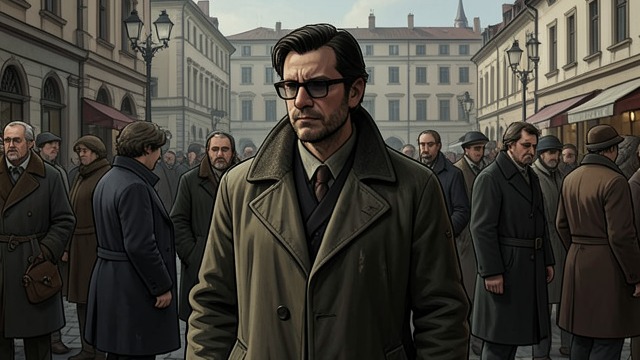
An Inherited Fact Recast
Personal distance
Viktor is not religious, and for years treats Jewishness as one fact among many about his family. Growing antisemitism makes him recognize that others may place it at the center of his identity.
His personal beliefs do not control how the state defines him.
Law begins to mark people
Anti-Jewish restrictions turn ancestry into an administrative category. The coming persecution threatens not only individuals but spouses, children, businesses, and homes.
Mixed Families Targeted
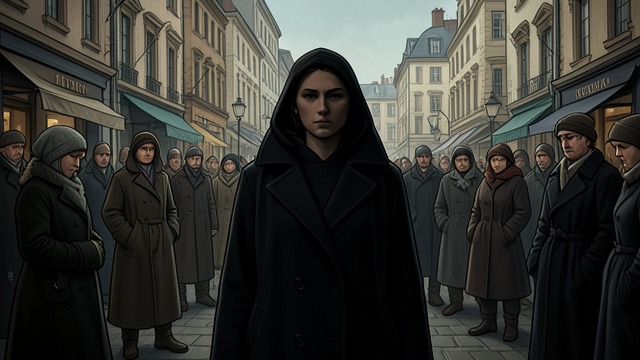
Marriage Made Political
Relationships reclassified
The regime’s laws define marriages between Jews and non-Jews as racial problems. Hana points out that these rules make intimate relationships appear illicit, even when they began before the law existed.
Children such as Ottilie and Martin are assigned the stigmatizing category of mixed ancestry.
Private life under state scrutiny
The laws reach into marriage, family, and sexuality. The state claims authority over relationships that the characters understand as personal and chosen.
Confiscation and Exile
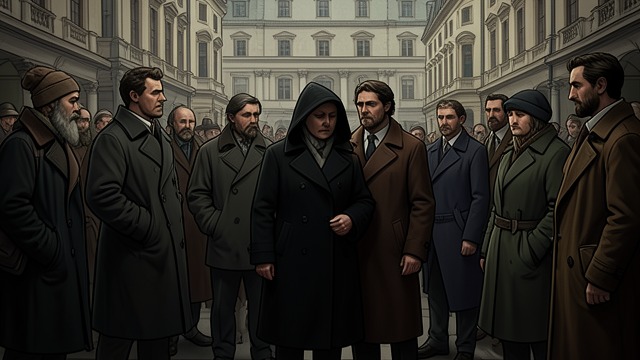
Identity Takes Property
The house is seized
The Landauer House is confiscated after Viktor’s Jewish identity makes the family a target. Its seizure turns racial classification into a material loss.
The family’s ability to escape does not prevent the home from being taken.
Dispossession expands
The house’s conversion into a Nazi institution shows how persecution moves from restriction to appropriation. Exile protects the family’s bodies for a time but removes them from their property and community.
Refugees Classified at Borders
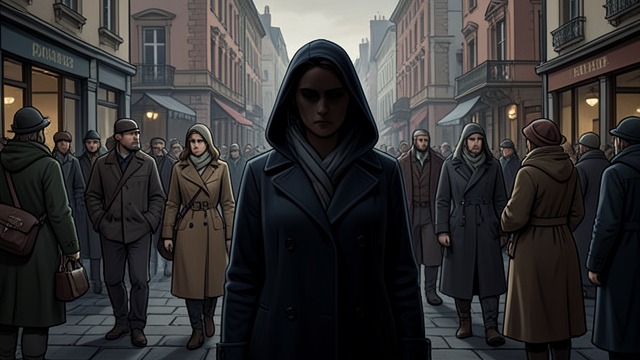
Identity Becomes a Travel Problem
Papers examined
Katalin and Marika’s lack of an ordinary passport makes their identity and status vulnerable to officials. Their Nansen papers, meant to facilitate travel, do not stop detention at Bayonne.
Border procedures privilege official recognition over the travelers’ lived circumstances.
Violence through routine
The separation is carried out without a declared battlefield. The episode shows that administrative power can inflict immediate harm while calling itself procedure.
After the Regimes Change
Categories Leave Long Shadows
Changed ownership and citizenship
The family’s property remains contested through successive governments, even after the Nazi regime falls. Political change alters official explanations without automatically restoring what was lost.
Different systems claim the house as public property, cultural heritage, or institutional space.
Memory survives classification
Former residents return with identities that have shifted through migration, marriage, and name changes. Their personal histories exceed the categories that once determined where they could live.
During Viktor’s early business life
During discussions of Nazi racial law
From the occupation of Město into exile
During the journey across France
From the postwar period to the 1990 return
